For years, smartphones and computers have threatened to erase writing by hand. Would that be so bad?
The Top 5 Benefits of Handwriting
For years, smartphones, laptops, and tablets have threatened to erase handwriting. And honestly, sometimes it really does feel like pens are becoming decorative objects rather than things people actually use.
But would losing texts written by hand really matter that much?
If you spend most of your day typing on a keyboard, writing by hand can start to feel ancient and inefficient. The average typing speed is around 50 words per minute, while handwriting often sits closer to 8–20 WPM depending on the person. On paper, typing wins easily.
Yet handwriting refuses to disappear. And there is a reason for that..
1. Trains Fine Motor Skills & Coordination
The old saying turns out to be true: If you do not use it, you lose it.
Handwriting is physical training too. Holding a pen, controlling pressure, forming letters, and coordinating movements all develop fine motor skills. Occupational therapy researchers have warned that children growing up primarily on tablets and phones may develop weaker handwriting readiness compared to previous generations.
Writing by hand activates complex coordination between the brain, fingers, eyes, and muscles. That process strengthens dexterity and control in ways typing simply does not replicate.
2. Boosts Memory
Typing is fast. Sometimes too fast. People often type words without fully processing them. Writing by hand is different because your brain has to physically construct every letter and movement.
Researchers studying cognition and education repeatedly found that students tend to remember information better when they write notes by hand.
Part of this happens because handwriting naturally filters information. Since writing manually is slower, people summarize ideas instead of copying everything word-for-word like they often do on laptops. In other words, the process forces active thinking.
3. Helps You Think More Clearly
Writers, artists, designers, mathematicians, and scientists often describe it as mentally different from typing.
Because it is slower, it creates more space between thoughts. Some people actually produce better ideas on paper because handwriting naturally interrupts impulsive thinking. You cannot endlessly delete, rewrite, and rearrange sentences every two seconds the way you can digitally.
That friction becomes useful. Several people who greatly favor handwriting describe it almost like a filtering mechanism. The brain has more time to process language before words appear on the page. Even diagrams, brainstorming maps, equations, or rough sketches usually feel easier on paper.
4. Handwritten Notes Feel More Human
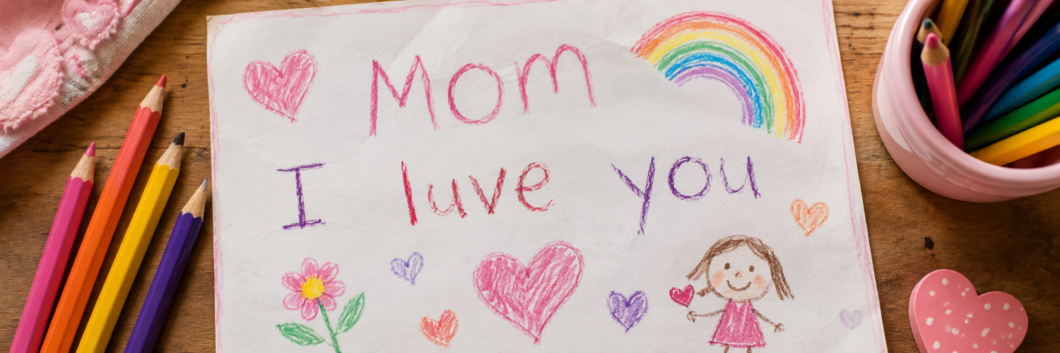
A typed message delivers information. A handwritten message often delivers emotion.
People rarely save printed emails for decades. But handwritten postcards, letters, birthday cards, or notes often become deeply personal objects. Many people still keep old handwritten messages from parents, grandparents, or partners years later.
Part of this is nostalgia, obviously. But part of it is psychological. Handwriting carries personality. Pressure, spacing, imperfections, speed, and style all reveal tiny traces of the person behind the words. Two people can type using the exact same font. Nobody writes exactly the same way by hand.
In a world increasingly filled with AI-generated content, handwriting may actually become one of the few remaining forms of unmistakably human communication.
5. Gains an Edge in the AI Era
Ironically, artificial intelligence could accidentally create a handwriting comeback.
Schools and universities are already struggling with AI-generated assignments and plagiarism concerns. Some professors are returning to handwritten exams simply because handwriting is harder to fake with automation tools.
Blue books — those old handwritten exam notebooks students hated — are reportedly becoming more common again in some universities.
The logic is simple: If students can outsource thinking to machines digitally, teachers need ways to verify actual comprehension. Handwriting becomes proof that a human being physically engaged with the material.
This does create fairness problems. Students with weak handwriting skills or motor difficulties can be disadvantaged. And nobody seriously believes handwritten essays should replace all technology.
But the trend reveals something fascinating: The more AI progresses, the more precious direct human output may become. Not because handwriting is more efficient. Because it is harder to automate.
Will Handwriting Disappear?
Probably not.
It will become less dominant, obviously. Most professional communication already happens digitally, and that is unlikely to reverse. Typing is simply too fast and convenient. But handwriting is surviving for the same reason vinyl records, paper books, and physical sketchpads survived.
It also carries something digital communication rarely captures — intention. When someone writes by hand, every word slows down, becomes more considered. You can almost feel the person behind the message in the pressure of the pen, the spacing, the imperfections. That physical trace of thought is what makes handwriting quietly powerful, even in a fast, automated world.
Maybe the true question is not whether handwriting will disappear, but what we lose if it ever does?