Best Programs & Resources for Learning Remote Viewing in USA
The Best Way To Learn How To Remote View in USA
People claim to make money in the stock market using remote viewing, or ESP. It’s no surprise that interest in learning the discipline is growing.
But most people new to remote viewing suffer from an inability to find sources of knowledge to bridge the gap between being a beginner and becoming a proficient remote viewer. This results in the vast majority of beginners getting frustrated and giving up before they should. They burn out. Not because remote viewing is hard (it’s not), but because learning to remote view is hard. And it really shouldn’t be.
So, is there a better way?
For some time, we were literally obsessed with finding an answer to that question.
What’s the best approach to learn RV?
We’ve discovered that today there are several ways to learn remote viewing in USA:
- studying at institutions like The Monroe Institute or International Remote Viewing Association
- training with former military remote viewers
- or self learning using specialized apps like VEREVIO
Let’s take a look at each segment in greater detail.
1. Institution Education
There isn’t a single unified “remote viewing university,” but there are structured programs and institutes that offer formal training. There you get a step-by-step system (CRV stages, ideograms, etc.). For beginners, that removes confusion. Some people care about learning from those connected to the original U.S. military programs. It feels more “authentic.” Practicing alone is hard. Courses create pressure to stay consistent.
But this segment gives you a false sense of confidence which will quickly disappear when you move to learning. It’s the realm of countless introductory books, videos and courses. A lot of money is made in this segment because most people learn a bit of basics and never go any further with it (not their fault, but I’ll get to that in just a sec).
There really isn’t anything lacking in this area. The market for learning remote viewing types, techniques, methods, protocols is so massive and so few people go beyond it, you’ll find an almost endless supply of material. Don’t get caught in the common trap of continuously learning and relearning. Once you’ve read two decent beginner books, call it good and move on to practice.
2 Former Military Remote Viewers
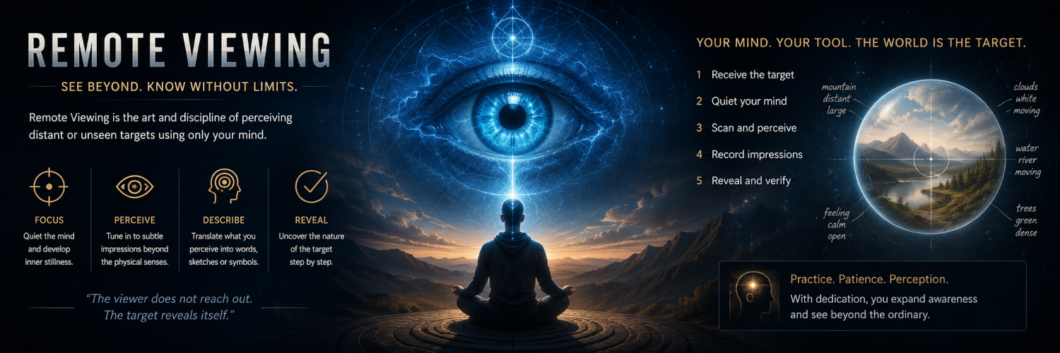
Remote viewing is a skill, and you can learn it from former military remote viewers who participated in the classic Controlled Remote Viewing program — the version considered the most widely recognized and structured. In reality, there are many different protocols, all of which evolved from students of that discipline. Some teachers expanded the methods, some simplified them, which makes it confusing for beginners: you don’t yet know the nuances, so it’s easy to get lost.
The best approach is to start by exploring the top 3–5 instructors, which is what we did. That includes Joseph McMoneagle, Paul Smith, and Lyn Buchanan. There are also instructors like Daz Smith, who are successors of these original students and offer training as well.
The cost can be steep. A few full seminars can run $2,000–$3,000, while shorter mini-courses might cost around $50. The most effective option is usually private one-on-one sessions — but they are, of course, quite expensive and not accessible for everyone.
3 Self Education
Remote viewing is a practice. You should learn a protocol and study what other viewers do and learn the history and all of that. Research is important. But even if you go and pay a coach online or go to some expensive seminar you’re still going to need to practice a lot to develop familiarity with how RV data feels. You can practice with some apps to get your feet wet.
In apps, it’s important not to pick something just for entertainment, but something that actually follows a real protocol. For us, that turned out to be VEREVIO. What stood out right away is the target base — not just hundreds, but thousands. And these aren’t random placeholders; they’re curated by real people, often with context, stories, and details that keep the process engaging.
Another thing is structure. Learning alone can get boring fast — we all know that. But here there’s a built-in program that suggests sets of exercises and trainers, so you’re not constantly wondering what to do next.
Practice is critical in any learning process, but feedback is just as important. The app handles both — you get statistics over time and immediate feedback on your sessions, so you can actually see patterns and progress instead of relying on vague feelings only.
If you don’t have a big budget but still want to learn seriously, this kind of tool is a solid option. A lot of people who show strong results in remote viewing are self-taught, so the idea of self-education isn’t just theory — it works. The key is having something structured enough to guide you while still letting you put in the reps. Apps like this are a practical way to get started and build that familiarity consistently.